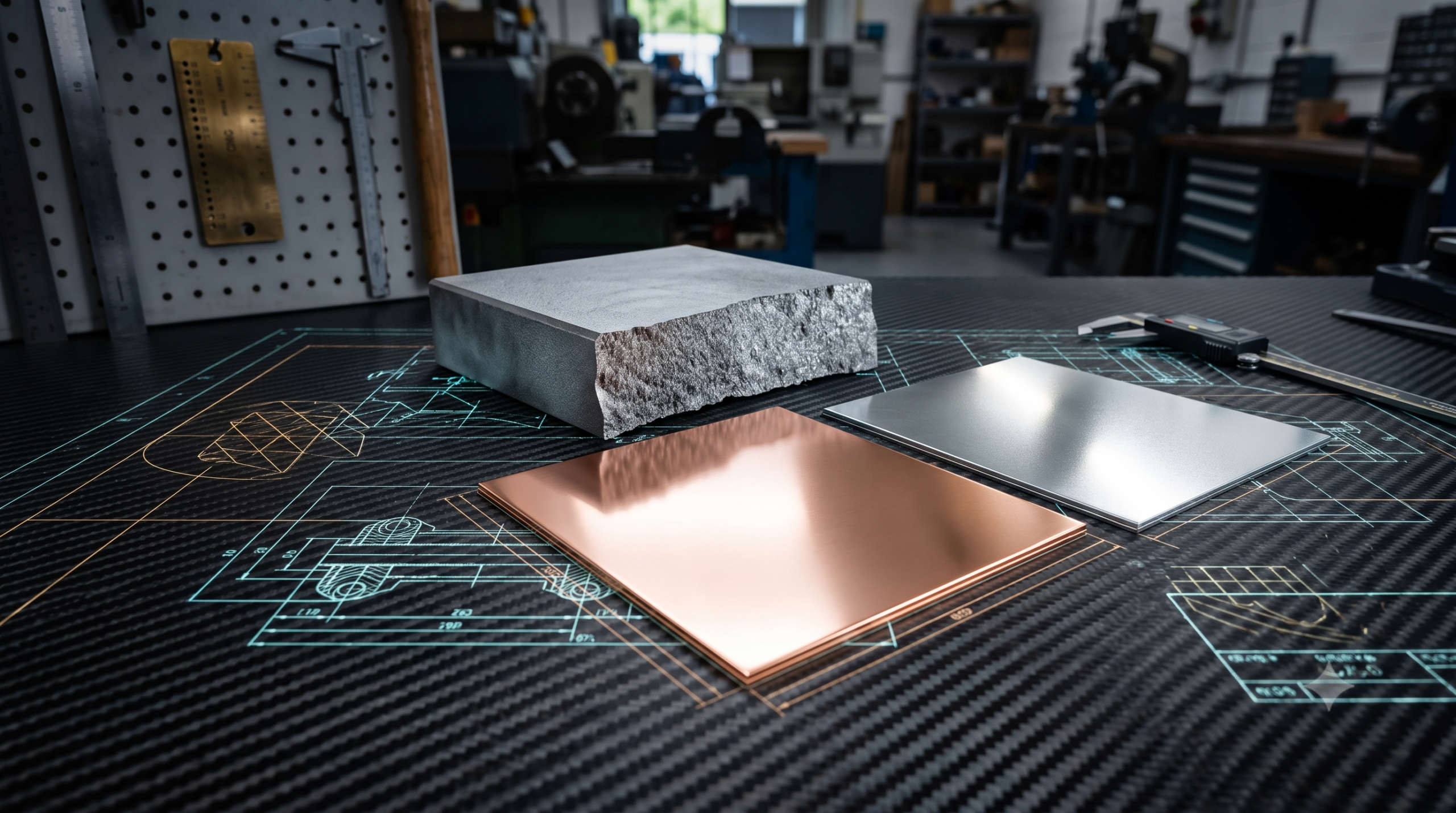
Introduction
In industrial manufacturing and workshop fabrication, mastering famous metals and their properties is the absolute core foundation for every technical professional. Whether engineering a tiny machine component or structural frames, understanding the diverse types of sheet metal dictates production quality. Every master technician must analyze how these engineering materials behave under extreme stress, heat, and structural physical loads.
For ITI Fitter and vocational trade theory students preparing for national NCVT CBT examinations, mastering famous metals and their properties alongside their specific sheet metal work tools is critical to securing high ranks. In this comprehensive blueprint, we will deep dive into the primary classification of ferrous and non-ferrous materials, chemical structures, and crucial workshop parameters based strictly on the latest NIMI pattern.
1. Primary Classification of Engineering Metals
Industrial raw materials are mineral substances extracted from deep earth mines in the raw form of natural ores. In standard machine shop theory, metals are broadly split into two primary divisions based entirely on their iron content:
A. Ferrous Metals (लोह धातु)
Ferrous metals contain iron as their predominant base element. They are strongly magnetic, heavy, and exhibit high melting points.
Pig Iron: The direct output of chemical reduction in a blast furnace.
Cast Iron: A highly brittle alloy rich in carbon and silicon.
Wrought Iron: The absolute purest form of industrial commercial iron.
Plain Carbon Steel: An adaptable mixture of iron and combined carbon.
B. Non-Ferrous Metals (अलोह धातु)
Non-ferrous materials do not contain any iron particles. They are highly sought after for specialized components due to their low weight, excellent electrical conductivity, and natural resistance to atmospheric corrosion. Key variants include pure aluminum, copper, and engineered alloys like brass, bronze, and gun metal.
2. Advanced Types of Sheet Metal and Core Materials
When metals are rolled into thin plates with a structural thickness of less than 5 mm, they are classified as sheet metal. The actual thickness is measured using a Standard Wire Gauge SWG. The operational mathematical rule dictates that the gauge number and physical thickness are inversely proportional; a lower gauge number represents thick material, while a higher gauge number denotes ultra-thin sheets.
⚙️ Standard Wire Gauge (SWG) Core Principle
The relationship between the gauge number and physical thickness is completely inversely proportional:
Here are the primary commercial types of sheet metal deployed across modern engineering workshops:
Black Iron Sheet Metal
This is an uncoated material manufactured from either mild steel or wrought iron. Due to the total absence of a protective barrier, it reacts rapidly with atmospheric moisture and becomes heavily rusted. It is inherently soft, ductile, and malleable. Components shaped from black iron sheets must be painted or coated immediately upon fabrication completion.
Galvanized Iron (G.I.) Sheet Metal
To stop rust formation, clean raw iron sheets are chemically washed and dipped into a hot bath of molten zinc. The resulting protective zinc coating creates galvanized iron sheets. These are highly resistant to environmental oxidation and are extensively used to manufacture everyday workshop articles like buckets, storage tanks, and boxes.
Aluminum Sheet Metal
Aluminum sheets are soft, ductile, highly anti-corrosive, lightweight, and cost-effective. Featuring a low specific gravity of 2.7 and a melting point of 660°C, they carry an ultimate tensile strength of 483 MPa, making them vital for airplane bodies, overhead cables, and automotive components.
Copper Sheet Metal
Boasting an exceptional electrical conductivity of $59.6 \times 10^6 \text{ S/m}$ and a melting point of 1083°C, copper sheets are highly ductile and malleable. This flexibility allows artisans to execute complex carving designs with ease. It serves as a superior conductor of heat and electricity.
Brass and Bronze Sheet Metals
Brass: A tough binary alloy consisting of 60% copper and 40% zinc. It is much harder than pure aluminum and is completely unaffected by atmospheric moisture.
Bronze: A high-strength alloy comprising 75% to 95% copper mixed with 5% to 25% tin, yielding great machinability.
Stainless Steel Sheet Metal
An advanced alloy of iron and chromium that offers elite corrosion resistance. It is immune to acids and alkaline rust, serving as the premier material for doctors’ medical apparatus and dairy food equipment.
3. Google Search Console (GSC) Technical Heading Solvers
Which sheet metal has a better appearance than other metals?
The definitive technical answer is Tin-Coated Sheet Metal (Tin Plate). These are specialized iron sheets coated with a pure layer of tin via an industrial process called tinning. Because tin provides a brilliant, lustrous silver-white finish that does not oxidize or rust under normal atmospheric conditions, it achieves a significantly better appearance than other metals. This premium aesthetic and chemical safety profile make it the perfect choice for household cooking utensils, dairy equipment, and food processing cans.
Which metal is very soft and heavy in sheet metal work?
In professional workshop practice, Lead Sheet Metal is the specific material that is very soft and heavy in sheet metal work. Lead features a highly dense physical structure with an exceptional specific gravity of 9, making it remarkably heavy, yet it remains completely malleable and flexible to the touch. Because it is highly plastic, it can be folded easily without cracking, and its complete resistance to chemical acids makes it the standard choice for the internal protective lining of acid storage tanks.
What is the best sheet metal for high-strength sheet metal parts?
When engineers require high-strength sheet metal to fabricate structural best sheet metal parts, they select Stainless Steel Sheet Metal (Grades 304 or 316) and High Carbon Steel. Stainless steel provides an unbeatable combination of tensile toughness and corrosion immunity, ensuring that the components do not buckle under high physical load or degrade when exposed to hazardous chemicals. For automotive bodies and structural frameworks where impact absorption is critical, these materials represent the strong sheet metal standard.
4. Comprehensive Breakdown of Famous Metals and Their Properties
To optimize material selection for engineering components, we must analyze the natural physical and operational mechanical traits of materials.
Physical Properties of Metals
These represent the natural, inherent characteristics visible or measurable without applying external mechanical cutting forces:
Colour: Aids instant material identification (e.g., copper is reddish-orange, gold is yellow, aluminum is silver-white).Weight & Density: Dictates structural mass. Aluminum is highly lightweight, whereas lead is exceptionally heavy.Structure: Explains internal microstructure fractures. Wrought iron features a fibrous structure, while cast iron shows a granular structure.Conductivity: The measure of a material’s capability to transfer heat or electrical current. Copper and aluminum score the highest metrics.
Magnetic Property: Ferrous metals are strongly attracted by magnets, while non-ferrous alloys show zero magnetic response.Fusibility: The temperature at which a solid transforms into a liquid. Tin features a low melting point (232°C), while tungsten melts at 3370°C.
Mechanical Properties of Metals
These properties define exactly how a material behaves when subjected to external workshop forces, hammering, or structural loads:
Ductility: The property that permits a metal to be permanently drawn out under tension into thin wire forms without experiencing rupture (e.g., copper wires).
Malleability: The capacity to permanently extend in all directions via rolling or hammering into thin sheets without fracturing (e.g., lead sheets).
Hardness: The structural capability of a metal to successfully resist surface scratching, mechanical wear, abrasion, and tool penetration.
Brittleness: The trait that permits no permanent deformation before fracturing. Brittle materials snap or break instantly rather than bending under sudden shock impact (e.g., cast iron).
Toughness: The capacity to withstand severe shock, twisting, or high-impact loads without breaking. It acts as the exact mechanical opposite of brittleness (e.g., wrought iron).
Tenacity: The ultimate ability of an engineering metal to resist powerful tearing tensile forces without breaking apart (e.g., mild steel).
Elasticity: The power of a material to return completely to its original shape and dimension once the external load is released (e.g., heat-treated spring steel).
5. Complete Overview of Sheet Metal Work Tools
Executing high-precision fabrication requires utilizing specialized, heavy-duty sheet metal work tools. These are categorized by their specific workshop function:
A. Measuring and Layout Marking Tools
Steel Rule & Tape: Hardened stainless steel rulers used to measure linear dimensions down to an accuracy limit of 0.5 mm.Wire Gauge (SWG): A circular metal disc featuring slots rated from 0 to 40, used to compute wire diameters and sheet thicknesses.Scriber: A hardened carbon steel marking tool ground at a 15° to 20° tip angle, used to trace clean layout lines on sheets.Divider & Trammel: Dividers scribe arcs up to a 200 mm radius. For extremely large layout circles, a heavy-duty beam trammel is deployed.
B. Striking and Cutting Tools
Workshop Hammers: Ball peen hammers spread metal uniformly. Cross peen hammers form internal grooves, and straight peen hammers stretch sheets at right angles.Soft Mallets: Wooden, rubber, or nylon hammers used to shape or straighten thin sheets with minimum surface damage. Special variants include round Bossing Mallets and wedge-shaped End Faked Mallets.Hand Snips: Heavy shears ground at 80° used to cut thin sheets up to 1.2 mm. Straight snips handle straight paths, while bent snips cut internal circular curves.Bench Shears & Power Hammers: Bench shears are bolted to worktables and ground at 87° to cut thick strips. Mechanical power hammers use compressed air, steam, or spring linkages to drive a heavy reciprocating ram down onto an anvil die for high-force forming.
C. Piercing Tools and Supporting Stakes
Punches: Solid punches create holes with a wooden support block placed underneath. Hollow punches core out clean discs from soft copper or leather belts, and pin punches drive out old rivets.
Workshop Stakes: Specialized mini-anvils providing structural forming support:Round Bottom Stake: Flat circular head used to form round shapes.Beak Iron Stake: Features a conical horn for funnels and a flat base for seaming.Hatchet Stake: Sharp knife-like edge for executing crisp 90° box bends.Half Moon & Funnel Stakes: Used for flanging utensils and planishing tapered work.
6. Industrial Application: Hems, Seams, and Notches
Hems: Folding sheet borders to eliminate sharp edges and increase rigidity. Available in single fold, double fold, and reinforced wire edge styles.Seams: Joint interfaces locking folded sheets together. Lap seams overlap edges for roofing. Grooved seams use a hand groover to lock hooked sections, while double seams fold single paned-down seams flat for airtight bucket bases.Notches: Openings cut from corners before folding to prevent material buckling. Options include straight slits, square notches, 45° slant notches, 90° V-notches, and wire notches cut at 30° angles to keep rolled wire edges clear of main seams.
7. Strategic Comparison: Ferrous vs. Non-Ferrous Alloys
| Structural Parameter | Ferrous Materials | Non-Ferrous Materials |
| Main Component | High presence of elemental iron. | Complete absence of iron particles. |
| Magnetic Behavior | Strongly attracted by magnets. | Shows zero magnetic response. |
| Rust Vulnerability | Highly prone to atmospheric rust. | Natural chemical corrosion resistance. |
| Tensile Strength | Exceptionally high structural limits. | Variable; lower structural weight profiles. |

Conclusion & High-Score CBT Exam Summary
To pass your NCVT trade theory exams with top marks, always remember these fundamental workshop secrets: Wrought iron is the absolute purest commercial format at 99.9% iron content. Tin-coated plates provide the finest aesthetic appearance and anti-rust protection. Lead represents the most flexible, heavy, and acid-immune metal, while high-carbon steel containing 1.1% to 1.4% carbon is selected for cutting tools. Standard Wire Gauge numbers are completely inversely proportional to physical millimeter limits.
Call to Action (CTA)
Which specific workshop operation, marking layouts with a beam trammel or executing a double grooved seam, do you find most challenging during your practical trade training sessions? Share your real workshop experiences, queries, or technical doubts in the comment section below, and share this comprehensive engineering guide with your fellow ITI Fitter batchmates!
Frequently Asked Questions (FAQs)
Q1: Which sheet metal has a better appearance than other metals in workshop trades?
Answer: Tin-coated sheet metal offers a significantly better appearance than other metals. The specialized tinning process deposits a lustrous silver-white finish that resists environmental rust, making it ideal for food containers and kitchen utensils.
Q2: Which metal is very soft and heavy in sheet metal work operations?
Answer: Lead sheet metal is the unique industrial material that is remarkably soft, heavy, and flexible. It features a high specific gravity of 9 along with total immunity to acid corrosion, making it perfect for chemical tank linings.
Q3: Why do Standard Wire Gauge (SWG) numbers operate inversely to actual sheet thickness?
Answer: SWG ratings are mathematically inversely proportional to physical thickness. Low numbers represent highly dense plates, while high numbers denote very thin sheets.
Q4: What is the main difference between hand snips and bench shears?
Answer: Hand snips cut thin sheet profiles up to 1.2 mm thickness using an 80° blade angle. Bench shears are bolted to worktables and ground at 87° to slice through thick plates using long mechanical levers.
Q5: Why is grey cast iron universally chosen to manufacture heavy machine tool bases?
Answer: Grey cast iron contains a unique internal graphite structure that provides excellent fluid casting flow, outstanding compressive strength, and high vibration-damping capacity to eliminate tool chatter during operations.
Q6: What is the primary function of cutting a wire notch into a sheet metal pattern?
Answer: A wire notch is a relief cut angled at 30° to prevent the rolled wire edge of a finished job from overlapping or distorting the structural layout of a primary joining seam.
Q7: Why must a thick wooden block support sheets during punch operations?
Answer: The wooden block absorbs structural shock impact. It allows solid or hollow punches to cleanly pierce the sheet metal without damaging the tool’s sharp cutting edge against a hardened steel surface.

Parameswar Mohanta
I am a NCVT-certified ITI expert (86% score) and a Full-stack Web Developer. As the founder of Info-ITI, I leverage my 6+ years of experience to provide high-quality NIMI-pattern mock tests and career guidance to ITI students nationwide.
