
Securing a stable, fulfilling career in technical education begins with understanding the administrative pathways set by governing bodies. For thousands of brilliant minds aiming to shape the future workforce, the updated ITI Junior Instructor Recruitment Rules serve as the definitive blueprint for entry. A trade instructor eligibility index acts as the central link connecting raw engineering principles with actual shop floor performance. If your dream is to master the ITI teaching exam structure and join the ranks of a professional ITI instructor, decoding these strict recruitment rule parameters is your very first task.
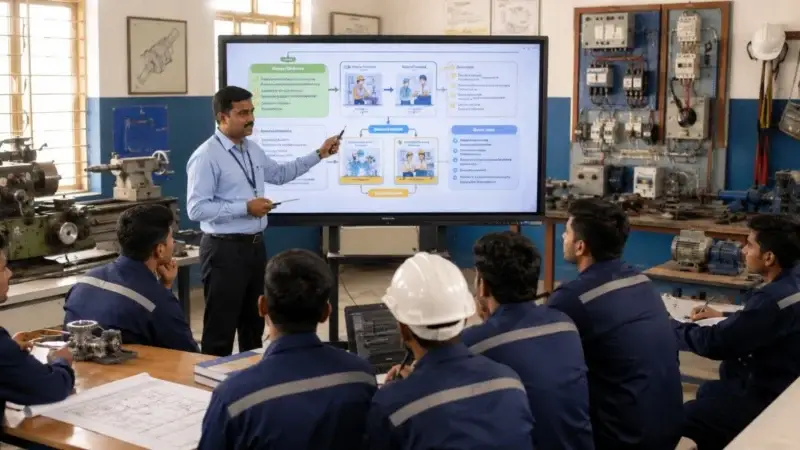
Vocational training structures undergo continuous global enhancements to bridge industrial gaps and refine training metrics across institutions. The updated framework establishes a unified administrative architecture governing trainer selections. This comprehensive eligibility criteria guideline sets a standardized baseline to upgrade pedagogical standards, ensuring technical instructors possess high tool efficiency and practical instructional competencies.
The strategic rollout of the ITI Junior Instructor Recruitment Rules addresses long-standing structural variations in institutional vocational frameworks. Administrative bodies designed this updated manual to clarify standard qualifications before applicants initiate training sessions. By strictly following the official ITI Junior Instructor Recruitment Rules, trade candidates can easily analyze their technical compatibility benchmarks, ensuring their profile submissions align flawlessly with future organizational vacancy allocations.
Table of Contents
📑Core Qualification & Structural Eligibility Matrix
The technical engineering workforce deployment requires a multi-layered verification protocol to maintain educational infrastructure safety. Candidates must strictly fulfill dynamic training benchmarks before registering their profiles within the vocational dashboard channels. The overall architecture is built to bring the most qualified, industry-ready professionals into training labs.
🧾Technical Degree and Diploma Specifications
Educational pathways are divided into clear academic streams to allow systemic entry parameters for a diverse vocational instructor qualification pool.
📋B.E. / B.Tech Engineering Trade Criteria
Engineering graduates planning to apply must evaluate how the ITI Junior Instructor Recruitment Rules modify traditional direct selection pipelines. Under the newly introduced criteria, even highly advanced academic degree streams must verify baseline technical operational standards. Adhering to the specific sub-clauses of the current ITI Junior Instructor Recruitment Rules helps engineering professionals structure their training certifications, avoiding technical processing errors during administrative scrutiny phases.
🔺Core Trade Theory Certification
Candidates must align their core engineering domains with standard NIMI pattern study materials, framework textbooks, and automated national occupational profiles. This ensures absolute synchronization between what is taught in classrooms and what the modern industry demands.
CITS Certification Mandate
The Craft Instructor Training Scheme (CITS certificate guidelines) training is the mandatory tracking mechanism ensuring structural pedagogy (shikshan padhati) mastery, tool alignment, and laboratory control capability. Without this verification step, mapping long-term technical educational matrices becomes highly complex.
📋Mechanical and Electrical Diploma Passouts
Technical diploma candidates are evaluated using custom academic modifiers, requiring verification of state-approved continuous training layouts. The system structure ensures diploma holders possess adequate design calculations before stepping into a live workshop setup.
🧾Industrial Work Experience Requirements
Practical execution experience documentation is systematically validated through institutional registers to filter post applications effectively. The recruitment engine allocates strict time-duration brackets based on the depth of the candidate’s initial academic background to balance theory with field skills.
📑Standardized Examination Pattern & Selection Process
The screening infrastructure uses integrated assessment mechanisms to evaluate field knowledge and analytical capabilities under timed conditions. The exam pattern assessment framework operates smoothly without structural compilation errors, delivering absolute clarity regarding target merit criteria.
🧾Computer-Based Test (CBT) Syllabus Layout
The written phase uses dynamic digital examination models to ensure maximum transparency and objective merit calculations. The entire blueprint is split into highly dedicated weightage zones.
📋Technical Trade Domain Weightage
Core vocational engineering components dominate the question selection matrix, testing deep technical engineering operational parameters.
🔺Engineering Drawing Protocols
This sub-unit evaluates graphic interpretation abilities, projections, geometric tolerances, and blueprint scaling reading accuracy. Instructors must read structural lines effortlessly before teaching students.
🔺Workshop Calculation & Science
Mathematical competency validation covers core industrial calculations, applied material physics formulas, and systematic unit conversion algorithms.
📋General Awareness & Cognitive Evaluation
A dedicated general aptitude segment evaluates logical reasoning metrics, regional current affairs, and basic administrative frameworks. This ensures selected trainers are well-rounded individuals capable of guiding students through complex socio-economic realities.
📊 Experience Metrics & Structural Comparison Matrix
To make these rules transparent and clear at a glance, we have structured the qualification tiers into a definitive reference matrix. The table below represents the core parameters enforced by the updated ITI Junior Instructor Recruitment Rules:
| Technical Qualification Group | Required Minimum Industrial Experience | Core Testing Mode | Focus Syllabus Weightage |
| B.E. / B.Tech Degree Holders | 1 Year Verified Experience | CBT + Document Verification | 70% Trade Theory + 30% Aptitude |
| 3-Year Technical Diploma | 2 Years Verified Experience | CBT + Document Verification | 70% Trade Theory + 30% Aptitude |
| ITI Certificate (NTC / NAC) | 3 Years Verified Experience | CBT + Skill Test + DV | 80% Practical + 20% Theory |
🔧 Workshop Usage & Industrial Applications
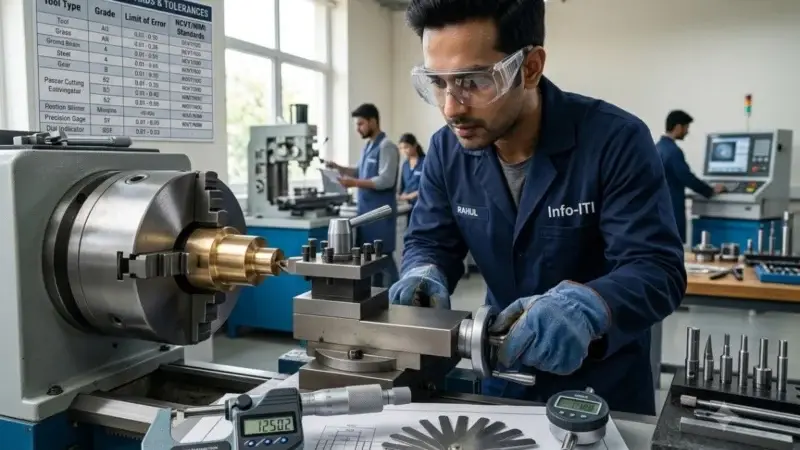
A Junior Instructor operates directly at the intersection of textbook education and high-intensity industrial applications. In a live laboratory environment, their duties extend far beyond basic lecturing.
- Machine Calibration and Setup: Trainers maintain complex laboratory setups, ensuring every lathe, milling machine, or circuit board matches safe operational thresholds.
- Precision Measurement Guidance: Instructors demonstrate the practical use of advanced vernier calipers, micrometers, and dial test indicators.
- Safety Standard Enforcement: They install strict workshop safety routines, teaching students to respect occupational safety margins and recognize warning flags before accidents occur.
💡 Importance for ITI Students & Competitive Exams
For students pursuing careers in public or private industrial training systems, mastering these parameters ensures clear guidance. Competitive exams targeting instructor roles extract data heavily from standard NCVT/CBT blueprints. If you know exactly how the selection engine calculates your parameters, you can build your prep timeline systematically to secure maximum output scores.
⚖️ Advantages & Disadvantages of Updated Recruitment Rules
Advantages
- Elevated Teaching Quality: Incorporating strict CITS and industrial mandates checks low-quality entry, bringing genuine experts to classroom panels.
- Enhanced Job Placements: When students learn from industry-hardened trainers, their real-world value shoots up instantly.
- Clear Promotional Channels: The new rules lay out clear organizational trajectories for rapid promotions within state education branches.
Disadvantages
- Longer Preparation Windows: Amassing three full years of field experience on top of specialized certifications delays swift career starts for standard ITI passouts.
- Socio-Economic Access Variations: Rural technical aspirants sometimes face structural limits when attempting to secure verified experience certificates from highly recognized firms.
📝 Practical Workshop Example & Analytical Formulas
When teaching core components like machining operations, a Junior Instructor must perfectly apply mathematical formulas to guide workshop speed parameters. For instance, calculating the cutting speed of a conventional turning piece requires the core layout equation:
Cutting Speed (v) = (π × d × n) / 1000
In this formula, “d” represents the true diameter of the metallic work material measured precisely in millimeters, while “n” tracks the spindle revolutions per minute (RPM) running on the machine spindle.
🤝 Professional Interview & Viva Voce Questions
Interview Questions
- How do you integrate cutting-edge green manufacturing concepts into old-school ITI workshop routines?
- Answer: I structure practical exercises around material reduction, teach strict tool cooling optimization to cut down power use, and prioritize immediate recycling of scrap chunks.
- What steps do you take if a high-voltage short circuit occurs in the electrical lab?
- Answer: My immediate step is to hit the main emergency trip switch (main switch cutout) to cut all power, followed by moving students safely outside and using proper Class “C” fire extinguishers if needed.
Viva Voice Questions
- What does the abbreviation ‘NIMI’ stand for in institutional curriculum design?
- Answer: It stands for National Instructional Media Institute, the premier center creating core vocational books.
- Why do we apply clearance angles to single-point cutting tools?
- Answer: Clearance angles prevent the flank of the tool from rubbing against the workpiece, stopping unnecessary friction and heat buildup.
🧠 Core Multiple Choice Questions (MCQs)
- Which specific qualification is globally prioritized as the pedagogical baseline according to the updated ITI Junior Instructor Recruitment Rules?
- A) Master of Arts
- B) Craft Instructor Training Scheme – CITS (✓)
- C) Diploma in Elementary Education
- D) Certificate in Computer Applications
- What is the structural experience limit fixed for candidates possessing a 3-year Technical Diploma?
- A) 5 Years
- B) 1 Year
- C) 2 Years (✓)
- D) 4 Years
- While calculating technical cutting metrics, the variable ‘d’ typically references:
- A) Total Depth of Cut
- B) Diameter of Workpiece (✓)
- C) Density of Material
- D) Distance of Travel
- Which centralized ministry oversees the long-term development of ITI instructor frameworks across the country?
- A) Ministry of Skill Development and Entrepreneurship (✓)
- B) Ministry of External Affairs
- C) Ministry of Finance
- D) Ministry of Health
📌 Fast Revision Notes
- Core Purpose: The ITI Junior Instructor Recruitment Rules establish quality standards across public and private vocational setups.
- Experience Thresholds: Degree lines require 1 year, Diploma tracks require 2 years, and Certificate fields mandate 3 years.
- Core Study Focus: Keep your test prep entirely locked to standard NIMI pattern study materials modules and NCVT blueprints.
- Safety Priority: Always emphasize machine guards, ear protection, and electrical grounding parameters during the live practical phase.
📑Age Limits, Relaxations, and Quota Framework
Hiring processes use strict age boundaries to secure balanced organizational lifespans while providing fair opportunities across demographics.
🧾Age Relaxation Standards for Technical Candidates
Upper age limits feature specific extensions for backward classes, physical handicaps, and economic sections matching central statutory policies. This ensures that experienced professionals who spent extra years gaining real-world workshop experience are not unfairly locked out of the selection process.
🧾Official Notification Alerts & ITI Junior Instructor Recruitment Rules Guidelines
State vocational training directorates release seasonal notification updates that directly apply the structural mandates outlined in the ITI Junior Instructor Recruitment Rules. Candidates are highly encouraged to map their preparation matrices according to these official parameters. Staying completely synchronized with the latest ITI Junior Instructor Recruitment Rules changes guarantees that technical aspirants never miss dynamic age limit updates, required trade syllabus shifts, or critical documentation layout timelines.
📑Frequently Asked Questions (FAQ Section)
🧾Q1: What is the minimum experience required for ITI Diploma holders?
Under the updated ITI Junior Instructor Recruitment Rules, candidates holding a state-approved 3-year technical diploma must document a minimum of 2 years of verified industrial work experience.
🧾Q2: Is a CITS certificate mandatory under the new recruitment rules?
Yes, under the updated administrative frameworks, holding a valid CITS credential is a mandatory parameter for final merit selections in most testing states.
🧾Q3: Can degree holders apply without industrial experience?
No, engineering degree holders must possess at least 1 year of verified industrial or teaching experience before the final application deadline closes.
📑Strategic Conclusion: The Path Forward
Aligning your career preparation models directly with the ITI Junior Instructor Recruitment Rules parameters guarantees secure, stress-free transitions into institutional instructor vacancies. Adhering closely to these structural evaluation matrices ensures applicants match the premium requirements of international occupational frameworks. Upgrading your credentials today is the most reliable way to land a premium teaching role tomorrow.
📑Premium Career Resources (Call to Action – CTA)
Looking for comprehensive syllabus matrices and NIMI pattern technical prep tools to clear these selection boards smoothly? Open a fresh browser window right now, navigate to Google, and look up “Info ITI“ to view our deep premium resource directories. Head directly to the official platform to clean up your study plans and share this structural map with your technical classmates on social channels!