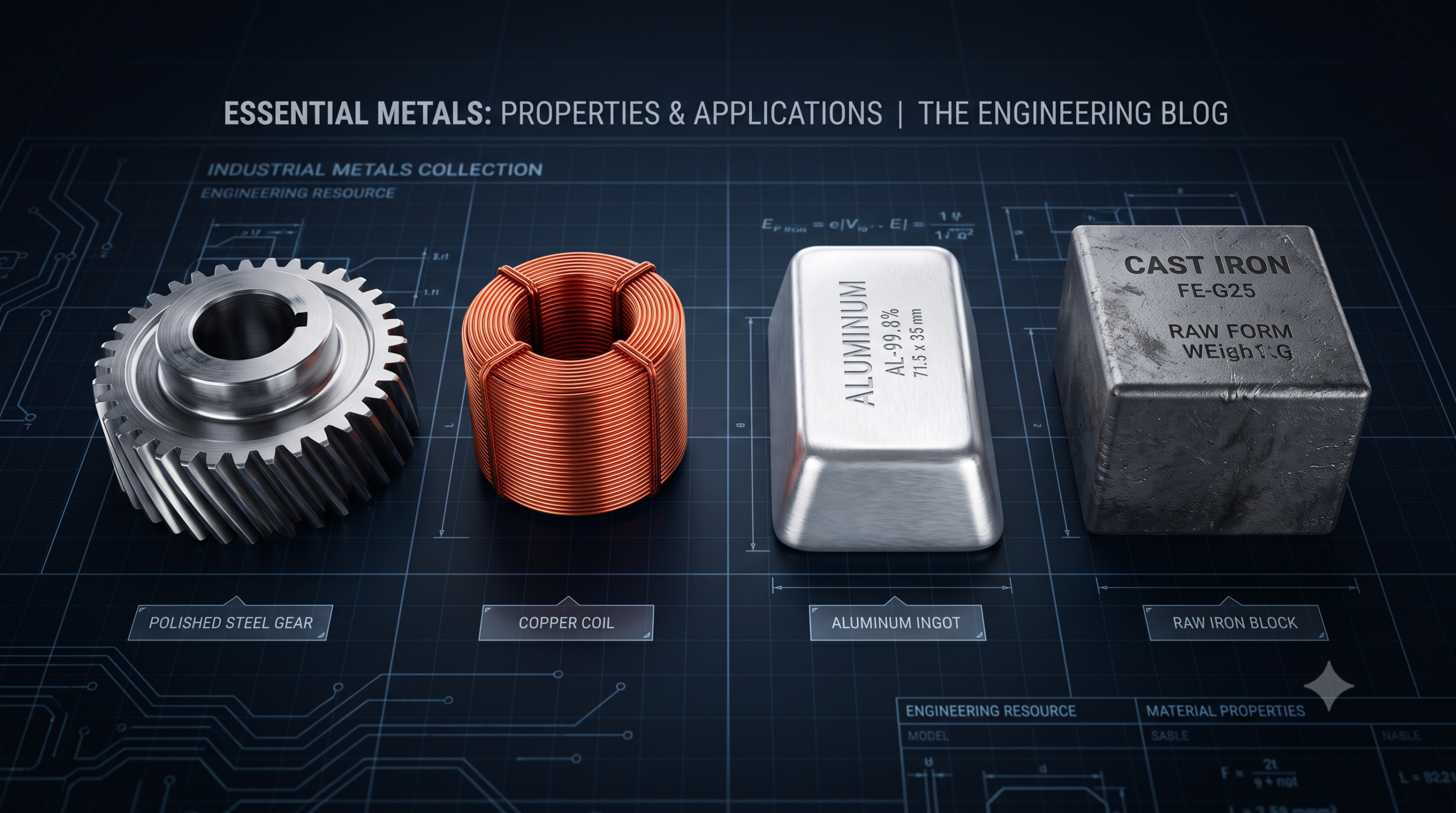
Industrial engineering relies heavily on analyzing famous metals and their properties to determine suitability for diverse manufacturing tasks:
1.1 Ferrous Metals: Iron, Carbon Steel, and Cast Iron
Ferrous metals form the foundation of heavy structural engineering. Reviewing famous metals and their properties demonstrates that carbon steel provides exceptional tensile strength and magnetic responsiveness.
1.2 Copper and Brass for Electrical and Plumbing Uses
Copper is celebrated for unmatched electrical conductivity, while brass provides excellent machinability and resistance to atmospheric corrosion.
1.2.1 Machining Famous Metals on Industrial Lathe Machines
Turning high-strength steel alloys requires rigid lathe workholding attachments. Check tooling gear in our best lathe accessories guide.
1.3 Aluminum and Titanium for Lightweight Structures
Aluminum provides a high strength-to-weight ratio for modern transport frames. Read our guide on joints or fastening methods.
1.4.1 Selecting Metal Alloys for High-Strength Fasteners
Fabricating heavy bolts requires alloy steels with high shear resistance. Explore hardware in our best fasteners for industry post.
2. Post-Casting Heat Treatment & Grain Structure Tuning
Manipulating famous metals and their properties through precision annealing and normalizing eliminates casting stresses and refines internal grain structure.
Read our comprehensive heat treatment process guide and case hardening methods for metal components.
3. Measuring Brinell Hardness and Tensile Strength Values
Verifying famous metals and their properties requires standard Brinell and Rockwell hardness testing protocols.
3.1 Interchangeability Limits in Metallurgical Components
Consistent material properties guarantee global manufacturing interchangeability. Read our guide on interchangeability in manufacturing and explore measuring instruments in our best precision measuring instruments guide.
4. Material Science Lab Safety & Toxic Fumes Rules
Melting and casting certain famous metals and their properties produces hazardous metallic oxide fumes. Always wear respiratory protection and ensure adequate ventilation. Review safety protocols in our occupational health and safety rules. Consult official ISO Metallurgy Safety Standards for compliance.
5. Advanced Metallurgical Insights & Crystal Lattice Systems
Advanced material science analyzes the atomic crystal lattices that define famous metals and their properties under extreme thermal stress.
5.1 Body-Centered Cubic and Face-Centered Cubic Lattices
Iron transitions between body-centered cubic (BCC) and face-centered cubic (FCC) crystal structures depending on temperature variations.
5.1.1 Micro-Alloying Element Grain Refinement Kinetics
Adding trace amounts of vanadium or titanium restricts grain growth during high-temperature forging cycles.
5.1.1.1 Iron-Carbon Phase Diagram Equilibrium Analysis
Analyzing the iron-carbon phase diagram predicts phase transformations between pearlite, ferrite, and cementite microstructures.
Famous Metals and Their Properties Selection Matrix (Real Data)
Pros and Cons of Ferrous vs Non-Ferrous Metals
Compare technical benefits and limits of ferrous versus non-ferrous metal classifications:
Common Material Selection Errors & Technical Solutions
Avoid these widespread workshop errors when evaluating famous metals and their properties:
1. Overlooking Corrosion Vulnerability: Using unalloyed low carbon steel in marine environments causes rapid structural oxidation. Solution: Specify stainless steel or galvanized coatings for corrosive operating conditions.
Workshop Math: Metal Alloy Density and Weight Formulas
Calculating metal component weights based on material density is tested in ITI Workshop Calculation exams. Access practice problems in our workshop calculation hub.
🧮 Practical Steel Bar Weight Calculation Example:
Steel Bar Diameter (d) = 20 mm Bar Length (L) = 1,000 mm (1 meter) Density of Steel (rho) = 0.00785 g/mm³
Cross-Sectional Area (A) = (3.1416 x 20^2) / 4 = 314.16 mm² Total Weight (W) = A x L x rho = 314.16 x 1,000 x 0.00785 = 2.46 kg per meter
Shop Floor Metallurgical Defect Diagnostics Table
International ISO 683 Heat-Treatable Steel Standards
Alloy steel grades studied among famous metals and their properties comply with global ISO 683 metallurgical specifications. Standards align with published research from the International Organization for Standardization (ISO).
Heavy Industrial Gearbox Material Selection Overhaul
A heavy machinery manufacturing plant experienced gear tooth pitting failures due to incorrect low-grade steel selection. Transitioning to case-hardened nickel-chromium alloy steel resolved surface wear issues and increased operating lifespan threefold.
Frequently Asked Questions
1. What are the key properties of famous metals like copper?
Copper is renowned for outstanding electrical and thermal conductivity, high ductility, and excellent corrosion resistance.
2. Why is carbon steel classified as a ferrous metal?
Carbon steel is classified as a ferrous metal because its primary base element is iron, which imparts magnetic properties and high tensile strength.
Have questions about famous metals and their properties or calculating alloy component weights? Share your queries in the comments below!
1. Five Core Metal Categories and Key Characteristics Explained
Industrial engineering relies heavily on analyzing famous metals and their properties to determine suitability for diverse manufacturing tasks:
1.1 Ferrous Metals: Iron, Carbon Steel, and Cast Iron
Ferrous metals form the foundation of heavy structural engineering. Reviewing famous metals and their properties demonstrates that carbon steel provides exceptional tensile strength and magnetic responsiveness.
1.2 Copper and Brass for Electrical and Plumbing Uses
Copper is celebrated for unmatched electrical conductivity, while brass provides excellent machinability and resistance to atmospheric corrosion.
1.2.1 Machining Famous Metals on Industrial Lathe Machines
Turning high-strength steel alloys requires rigid lathe workholding attachments. Check tooling gear in our best lathe accessories guide.
1.3 Aluminum and Titanium for Lightweight Structures
Aluminum provides a high strength-to-weight ratio for modern transport frames. Read our guide on joints or fastening methods.
1.4.1 Selecting Metal Alloys for High-Strength Fasteners
Fabricating heavy bolts requires alloy steels with high shear resistance. Explore hardware in our best fasteners for industry post.
2. Post-Casting Heat Treatment & Grain Structure Tuning
Manipulating famous metals and their properties through precision annealing and normalizing eliminates casting stresses and refines internal grain structure.
Read our comprehensive heat treatment process guide and case hardening methods for metal components.
3. Measuring Brinell Hardness and Tensile Strength Values
Verifying famous metals and their properties requires standard Brinell and Rockwell hardness testing protocols.
3.1 Interchangeability Limits in Metallurgical Components
Consistent material properties guarantee global manufacturing interchangeability. Read our guide on interchangeability in manufacturing and explore measuring instruments in our best precision measuring instruments guide.
4. Material Science Lab Safety & Toxic Fumes Rules
Melting and casting certain famous metals and their properties produces hazardous metallic oxide fumes. Always wear respiratory protection and ensure adequate ventilation. Review safety protocols in our occupational health and safety rules. Consult official ISO Metallurgy Safety Standards for compliance.
5. Advanced Metallurgical Insights & Crystal Lattice Systems
Advanced material science analyzes the atomic crystal lattices that define famous metals and their properties under extreme thermal stress.
5.1 Body-Centered Cubic and Face-Centered Cubic Lattices
Iron transitions between body-centered cubic (BCC) and face-centered cubic (FCC) crystal structures depending on temperature variations.
5.1.1 Micro-Alloying Element Grain Refinement Kinetics
Adding trace amounts of vanadium or titanium restricts grain growth during high-temperature forging cycles.
5.1.1.1 Iron-Carbon Phase Diagram Equilibrium Analysis
Analyzing the iron-carbon phase diagram predicts phase transformations between pearlite, ferrite, and cementite microstructures.
Famous Metals and Their Properties Selection Matrix (Real Data)
Pros and Cons of Ferrous vs Non-Ferrous Metals
Compare technical benefits and limits of ferrous versus non-ferrous metal classifications:
Common Material Selection Errors & Technical Solutions
Avoid these widespread workshop errors when evaluating famous metals and their properties:
1. Overlooking Corrosion Vulnerability: Using unalloyed low carbon steel in marine environments causes rapid structural oxidation. Solution: Specify stainless steel or galvanized coatings for corrosive operating conditions.
Workshop Math: Metal Alloy Density and Weight Formulas
Calculating metal component weights based on material density is tested in ITI Workshop Calculation exams. Access practice problems in our workshop calculation hub.
🧮 Practical Steel Bar Weight Calculation Example:
Steel Bar Diameter (d) = 20 mm Bar Length (L) = 1,000 mm (1 meter) Density of Steel (rho) = 0.00785 g/mm³
Cross-Sectional Area (A) = (3.1416 x 20^2) / 4 = 314.16 mm² Total Weight (W) = A x L x rho = 314.16 x 1,000 x 0.00785 = 2.46 kg per meter
Shop Floor Metallurgical Defect Diagnostics Table
International ISO 683 Heat-Treatable Steel Standards
Alloy steel grades studied among famous metals and their properties comply with global ISO 683 metallurgical specifications. Standards align with published research from the International Organization for Standardization (ISO).
Heavy Industrial Gearbox Material Selection Overhaul
A heavy machinery manufacturing plant experienced gear tooth pitting failures due to incorrect low-grade steel selection. Transitioning to case-hardened nickel-chromium alloy steel resolved surface wear issues and increased operating lifespan threefold.
Frequently Asked Questions
1. What are the key properties of famous metals like copper?
Copper is renowned for outstanding electrical and thermal conductivity, high ductility, and excellent corrosion resistance.
2. Why is carbon steel classified as a ferrous metal?
Carbon steel is classified as a ferrous metal because its primary base element is iron, which imparts magnetic properties and high tensile strength.
Have questions about famous metals and their properties or calculating alloy component weights? Share your queries in the comments below!
Analyzing famous metals and their properties is vital for selecting robust industrial alloys. Understanding tensile strength, thermal conductivity, and crystal behavior prevents component failure on the shop floor.
Famous Metals and Their Properties: Complete Industrial Material Guide
Manufacturing precision parts requires a deep understanding of famous metals and their properties to match raw material specifications with working stress demands.
Evaluating the mechanical behavior of famous metals and their properties ensures that structural machinery withstands heavy thermal and mechanical loads without cracking. This trade theory module prepares technicians for NIMI and NCVT MIS examinations. Core material science topics covered include:
- Ferrous Alloys: Carbon steel and cast iron configurations for maximum structural rigidity.
- Non-Ferrous Elements: Copper, aluminum, and brass for electrical and corrosion-resistant tasks.
- Physical Parameters: Melting thresholds, density formulas, and atomic lattice structures.
📌 Quick Navigation Agenda
1. Five Core Metal Categories and Key Characteristics Explained
Industrial engineering relies heavily on analyzing famous metals and their properties to determine suitability for diverse manufacturing tasks:
1.1 Ferrous Metals: Iron, Carbon Steel, and Cast Iron
Ferrous metals form the foundation of heavy structural engineering. Reviewing famous metals and their properties demonstrates that carbon steel provides exceptional tensile strength and magnetic responsiveness.
1.2 Copper and Brass for Electrical and Plumbing Uses
Copper is celebrated for unmatched electrical conductivity, while brass provides excellent machinability and resistance to atmospheric corrosion.
1.2.1 Machining Famous Metals on Industrial Lathe Machines
Turning high-strength steel alloys requires rigid lathe workholding attachments. Check tooling gear in our best lathe accessories guide.
1.3 Aluminum and Titanium for Lightweight Structures
Aluminum provides a high strength-to-weight ratio for modern transport frames. Read our guide on joints or fastening methods.
1.4.1 Selecting Metal Alloys for High-Strength Fasteners
Fabricating heavy bolts requires alloy steels with high shear resistance. Explore hardware in our best fasteners for industry post.
2. Post-Casting Heat Treatment & Grain Structure Tuning
Manipulating famous metals and their properties through precision annealing and normalizing eliminates casting stresses and refines internal grain structure.
Read our comprehensive heat treatment process guide and case hardening methods for metal components.
3. Measuring Brinell Hardness and Tensile Strength Values
Verifying famous metals and their properties requires standard Brinell and Rockwell hardness testing protocols.
3.1 Interchangeability Limits in Metallurgical Components
Consistent material properties guarantee global manufacturing interchangeability. Read our guide on interchangeability in manufacturing and explore measuring instruments in our best precision measuring instruments guide.
4. Material Science Lab Safety & Toxic Fumes Rules
Melting and casting certain famous metals and their properties produces hazardous metallic oxide fumes. Always wear respiratory protection and ensure adequate ventilation. Review safety protocols in our occupational health and safety rules. Consult official ISO Metallurgy Safety Standards for compliance.
5. Advanced Metallurgical Insights & Crystal Lattice Systems
Advanced material science analyzes the atomic crystal lattices that define famous metals and their properties under extreme thermal stress.
5.1 Body-Centered Cubic and Face-Centered Cubic Lattices
Iron transitions between body-centered cubic (BCC) and face-centered cubic (FCC) crystal structures depending on temperature variations.
5.1.1 Micro-Alloying Element Grain Refinement Kinetics
Adding trace amounts of vanadium or titanium restricts grain growth during high-temperature forging cycles.
5.1.1.1 Iron-Carbon Phase Diagram Equilibrium Analysis
Analyzing the iron-carbon phase diagram predicts phase transformations between pearlite, ferrite, and cementite microstructures.
Famous Metals and Their Properties Selection Matrix (Real Data)
Pros and Cons of Ferrous vs Non-Ferrous Metals
Compare technical benefits and limits of ferrous versus non-ferrous metal classifications:
Common Material Selection Errors & Technical Solutions
Avoid these widespread workshop errors when evaluating famous metals and their properties:
1. Overlooking Corrosion Vulnerability: Using unalloyed low carbon steel in marine environments causes rapid structural oxidation. Solution: Specify stainless steel or galvanized coatings for corrosive operating conditions.
Workshop Math: Metal Alloy Density and Weight Formulas
Calculating metal component weights based on material density is tested in ITI Workshop Calculation exams. Access practice problems in our workshop calculation hub.
🧮 Practical Steel Bar Weight Calculation Example:
Steel Bar Diameter (d) = 20 mm Bar Length (L) = 1,000 mm (1 meter) Density of Steel (rho) = 0.00785 g/mm³
Cross-Sectional Area (A) = (3.1416 x 20^2) / 4 = 314.16 mm² Total Weight (W) = A x L x rho = 314.16 x 1,000 x 0.00785 = 2.46 kg per meter
Shop Floor Metallurgical Defect Diagnostics Table
International ISO 683 Heat-Treatable Steel Standards
Alloy steel grades studied among famous metals and their properties comply with global ISO 683 metallurgical specifications. Standards align with published research from the International Organization for Standardization (ISO).
Heavy Industrial Gearbox Material Selection Overhaul
A heavy machinery manufacturing plant experienced gear tooth pitting failures due to incorrect low-grade steel selection. Transitioning to case-hardened nickel-chromium alloy steel resolved surface wear issues and increased operating lifespan threefold.
Frequently Asked Questions
1. What are the key properties of famous metals like copper?
Copper is renowned for outstanding electrical and thermal conductivity, high ductility, and excellent corrosion resistance.
2. Why is carbon steel classified as a ferrous metal?
Carbon steel is classified as a ferrous metal because its primary base element is iron, which imparts magnetic properties and high tensile strength.
Have questions about famous metals and their properties or calculating alloy component weights? Share your queries in the comments below!