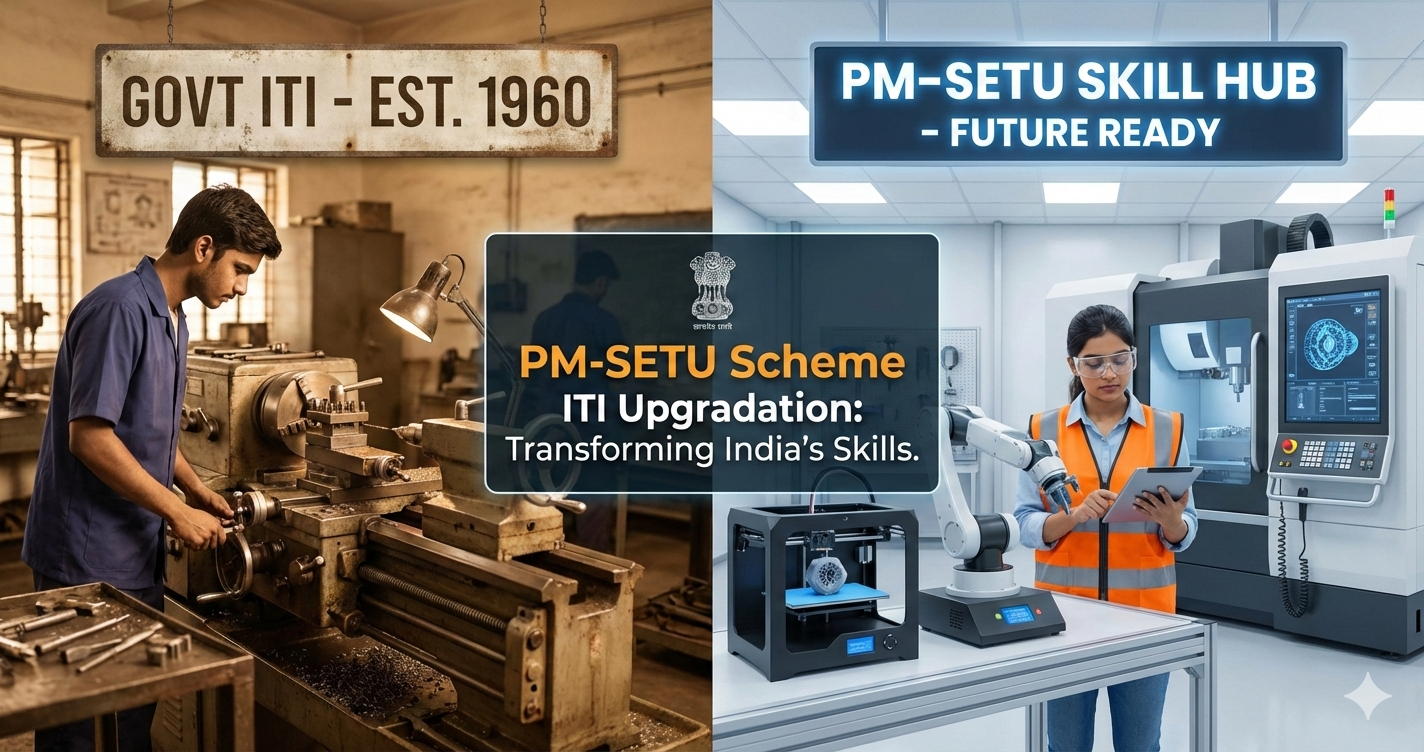
The PM-SETU Scheme ITI Upgradation is officially here to redefine the future of Indian vocational training. For students like Deepak, a 19-year-old from a bustling neighborhood in Kanpur, this means the end of learning on outdated machines and the beginning of a high-tech, high-paying career. Deepak always had a knack for fixing things, from his neighbor’s fan to his father’s old scooter, but when he joined a local Industrial Training Institute (ITI), his heart sank. The machines were older than he was.
“Am I preparing for the future or the past?” Deepak wondered.
On Wednesday, that question received a powerful answer. The Ministry of Skill Development and Entrepreneurship (MSDE) invited industry leaders to take the reins of ITIs. This marks a historic shift toward industry-led training, ensuring that what students learn in the classroom is exactly what factories need.
1. Industry-Led Governance (The SPV Model)
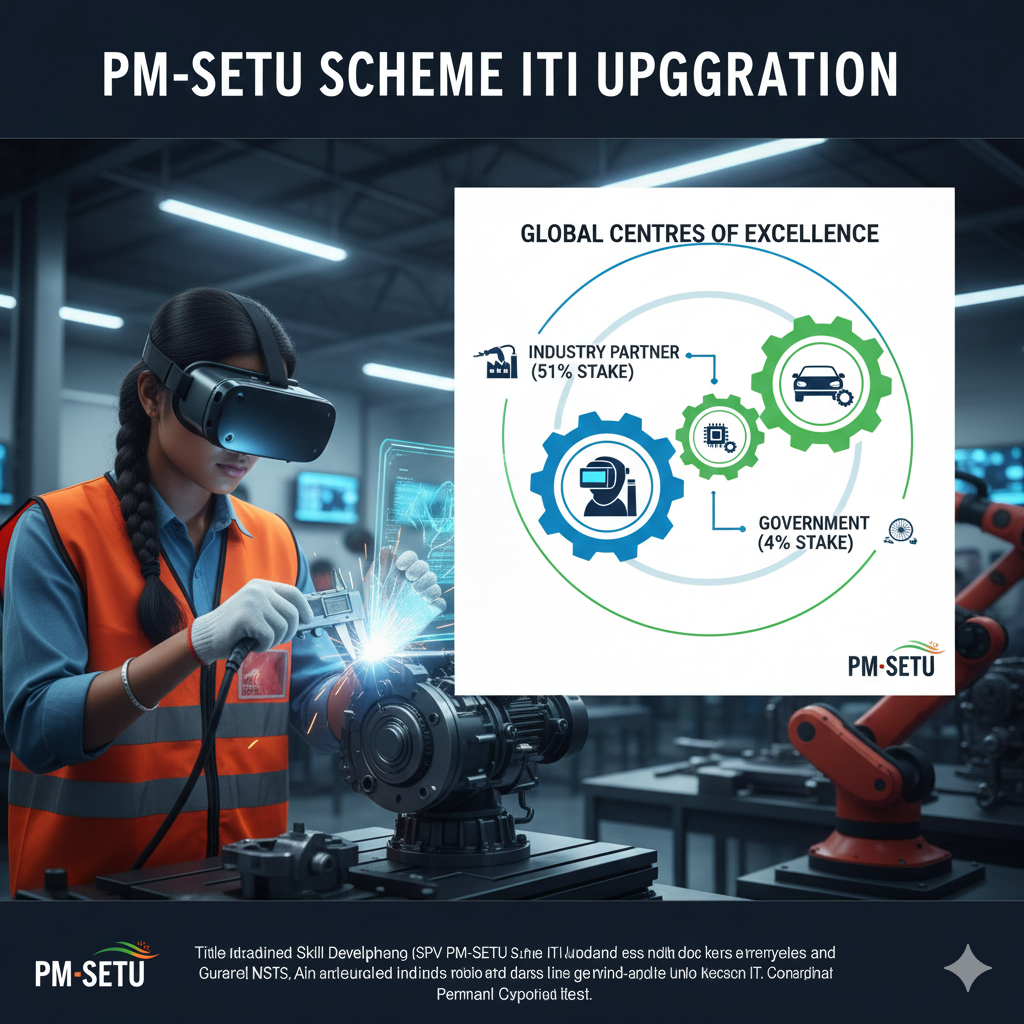
The biggest change in the PM-SETU Scheme ITI Upgradation is how these schools are run. Instead of being purely government-managed, each ITI will be run by a Special Purpose Vehicle (SPV).
- Industry Partners: Hold a 51% stake, giving them control over training quality.
- Government: Holds a 49% stake, providing land and co-funding.This ensures that the training is always what the market actually needs.
2. Massive ₹60,000 Crore Funding
This is not a small update. The Union Cabinet approved a budget that allows for high-tech machinery, better buildings, and global-standard labs. The government covers up to 83% of the project cost, removing the financial burden from the institutes.
3. The Smart Hub-and-Spoke Model
The PM-SETU Scheme ITI Upgradation utilizes a “Hub-and-Spoke” system:
- 200 Hub ITIs: Central powerhouses with the most advanced technology.
- 800 Spoke ITIs: Local centers that share the resources of the Hubs. This means a student in a small village (Spoke) can still access the expensive robotic arms at the regional Hub.
Data Table: PM-SETU vs. Traditional ITI Training
| Feature | Traditional ITIs | PM-SETU Upgraded ITIs |
| Primary Stakeholder | Government Only | Industry Partners (51%) |
| Technology Level | Manual/Legacy | AI, Robotics, Green Energy |
| Budget Outlay | Standard | ₹60,000 Crore (Dedicated) |
| Curriculum | Fixed (Static) | Job-Linked (Dynamic) |
| Placement Guarantee | Indirect | Direct Industry Linkage |
4. Global Centres of Excellence (NSTIs)
Five National Skill Training Institutes (NSTIs) in Bhubaneswar, Chennai, Hyderabad, Kanpur, and Ludhiana are being upgraded to “Global Centres of Excellence.” These will serve as the benchmark for vocational training worldwide.
5. Designing Industry-Relevant Curricula
Under the PM-SETU Scheme ITI Upgradation, Anchor Industry Partners are responsible for writing the textbooks. Students won’t just learn theory; they will learn the exact processes used by companies like Maruti Suzuki, Tata Motors, or Samsung.
6. Real-World Digital Infrastructure
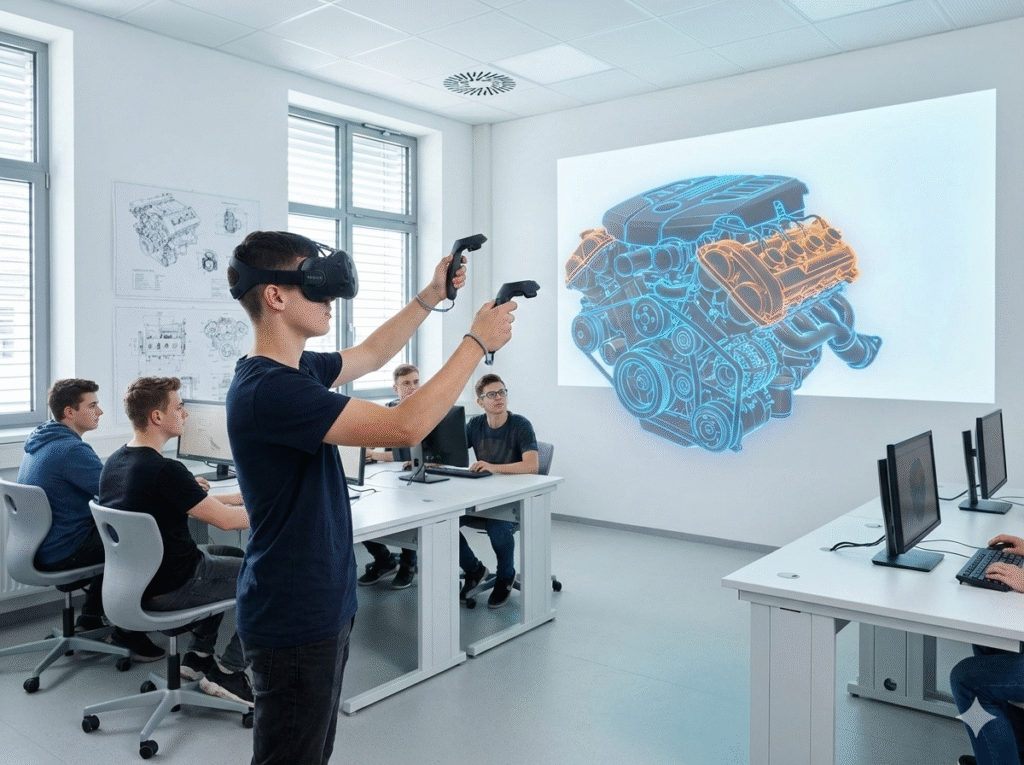
The scheme introduces high-speed digital learning and Virtual Reality (VR) labs. Students can practice high-risk welding or electrical repairs in a safe, virtual environment before touching real equipment.
7. Faculty Exposure to Industry
Instructors aren’t left behind. The PM-SETU Scheme ITI Upgradation includes mandatory industry stints for teachers. They go to the factories to learn new trends and bring that knowledge back to the classroom.
8. State and Union Territory EOIs
States like Karnataka, Gujarat, Assam, and Chandigarh have already started the process. This local involvement ensures that the training matches the local economy (e.g., Tea processing in Assam, Aerospace in Karnataka).
9. Focus on Future-Ready Trades
The scheme isn’t just for traditional mechanics. It focuses on:
- Electric Vehicle (EV) Maintenance
- Drone Technology
- Solar and Green Hydrogen
- Semiconductor Manufacturing
10. Guaranteed Job-Linked Training
Because the industry partner has a majority stake in the ITI, they are incentivized to hire the graduates. The PM-SETU Scheme ITI Upgradation turns the ITI into a direct pipeline for high-paying manufacturing jobs.
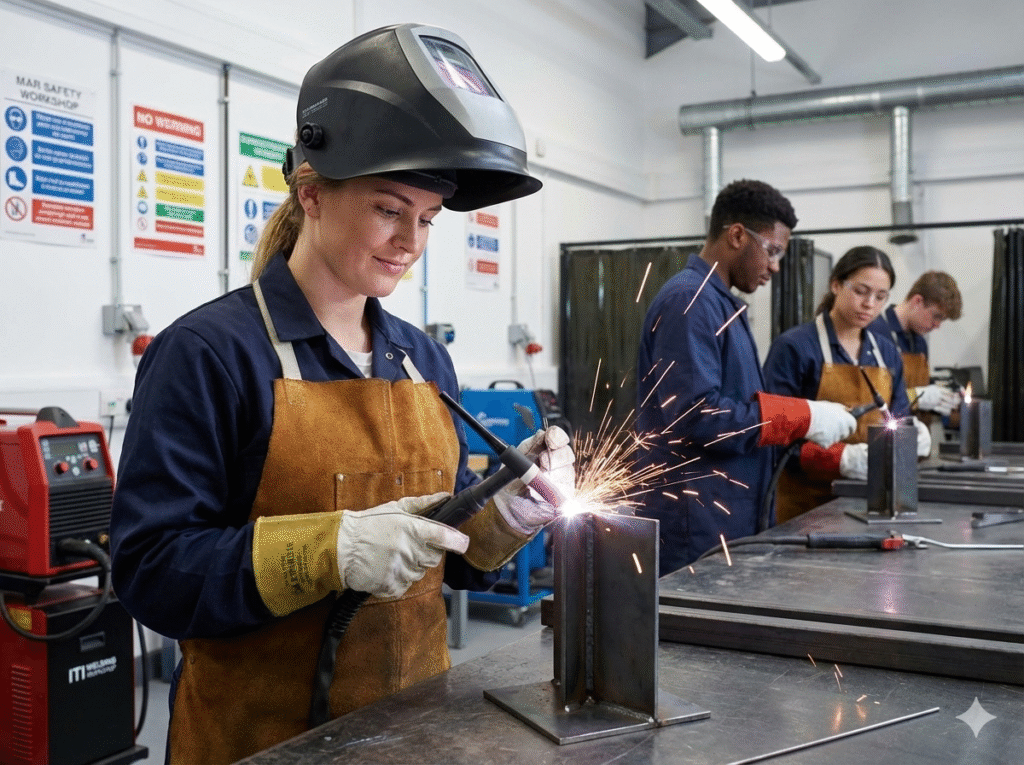
Conclusion: Engineering a New India
The PM-SETU Scheme ITI Upgradation is the bridge India has been waiting for. By removing the disconnect between education and employment, the MSDE is ensuring that every youth has the chance to become a skilled professional. If you are a student, this is your time to shine. If you are an industry leader, this is your chance to build your future workforce.
FAQ: PM-SETU Scheme ITI Upgradation
What exactly is the PM-SETU Scheme?
It is a government initiative launched in 2025 to modernize 1,000 government ITIs and 5 NSTIs with a budget of ₹60,000 crore, making the training industry-led.
Who can apply as an Anchor Industry Partner?
Large companies and industrial houses can apply through the Expression of Interest (EOI) to take a 51% stake in an ITI’s management.
How does the Hub-and-Spoke model help students?
It ensures that advanced, expensive equipment in one central “Hub” is accessible to four “Spoke” ITIs, making high-tech education available to more students.
Which states are currently implementing this?
Karnataka, Gujarat, Assam, and Chandigarh have already issued EOIs to invite industry participation.
Will this improve placement rates?
Yes. Since the industries are designing the curriculum and managing the institutes, the training is directly linked to existing job vacancies.
What is the role of the SPV?
The Special Purpose Vehicle (SPV) acts as the board of directors for the ITI, allowing the industry to make fast, business-like decisions for the school.
Is the training only for manual labor?
No. The PM-SETU Scheme ITI Upgradation focuses heavily on digital skills, AI, robotics, and green energy technology.

Parameswar Mohanta
I am a NCVT-certified ITI expert (86% score) and a Full-stack Web Developer. As the founder of Info-ITI, I leverage my 6+ years of experience to provide high-quality NIMI-pattern mock tests and career guidance to ITI students nationwide.


JOIN FOR UPDATES