Introduction: ITI Supplementary Examination is Your Career Lifeline
The ITI Supplementary Examination (also often referred to as a Backlog Exam or Re-examination) is more than just a procedural formality; it is a vital second chance provided by the Directorate General of Training (DGT) under the Ministry of Skill Development and Entrepreneurship (MSDE). It is a lifeline, specifically designed for candidates like Amit and me, who have failed in one or two subjects (theoretical, practical, or sessional) but have otherwise completed their NCVT (National Council for Vocational Training) or SCVT (State Council for Vocational Training) course requirements.
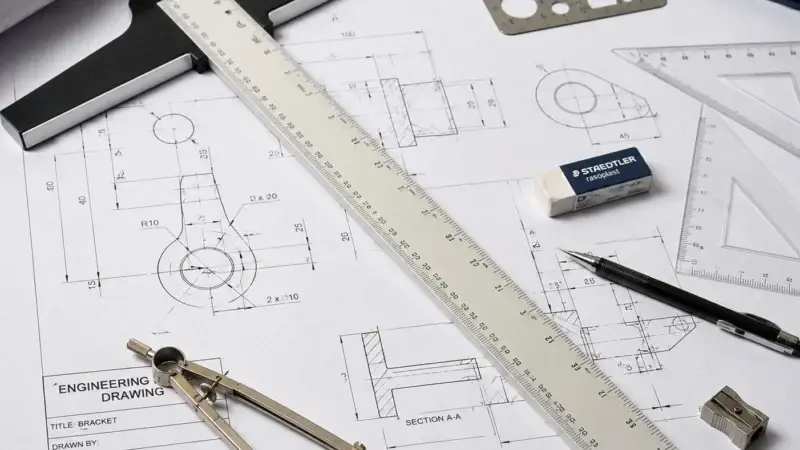
This article is your definitive guide to understanding, preparing for, and acing the ITI Supplementary Examination, turning your temporary setback into a powerful comeback story.
Table of Contents
Understanding the ITI Supplementary Examination Landscape
The ITI system is the backbone of India’s skilled workforce. As of fiscal year 2022-23, India had over 15,000 ITIs (both government and private) with a massive intake capacity, churning out lakhs of skilled technicians every year. The quality control is strict, which inevitably leads to a percentage of students who need to reattempt.
The Role of DGT and NCVT in Supplementary Exams
The entire process is governed by the DGT, which sets the standards for the NCVT MIS (Management Information System) for all affiliated ITIs.
- NCVT: The central authority that validates the course and issues the final National Trade Certificate (NTC). Without clearing all subjects, including the supplementary papers, the NTC is not awarded.
- DGT Guidelines: The DGT mandates specific windows for supplementary examinations, typically held soon after the main results or sometimes aligned with the next main examination cycle. This ensures that a candidate’s career is not unduly stalled.
Who is Eligible for the ITI Supplementary Examination?
The eligibility criteria are straightforward and typically cover the following scenarios:
- Failure in Specific Subjects: Candidates who fail one or more subjects (Trade Theory, Engineering Drawing, Workshop Calculation & Science, Employability Skills, or Practical) in the main examination.
- Attendance Shortfall (Rare): In some cases, students with a minor shortfall in minimum attendance might be allowed to sit for the supplementary exam, though this is less common and often requires DGT/State approval.
- Candidates from Previous Batches: Often, candidates from previous batches who have a backlog are also given a chance to clear their papers in the current supplementary cycle.
📈 Data Dive: The Stakes and the Opportunity
The numbers clearly show the significance of the ITI system and, by extension, the supplementary examination. A failure rate, while sometimes seen negatively, underscores the high standard of technical education being maintained.
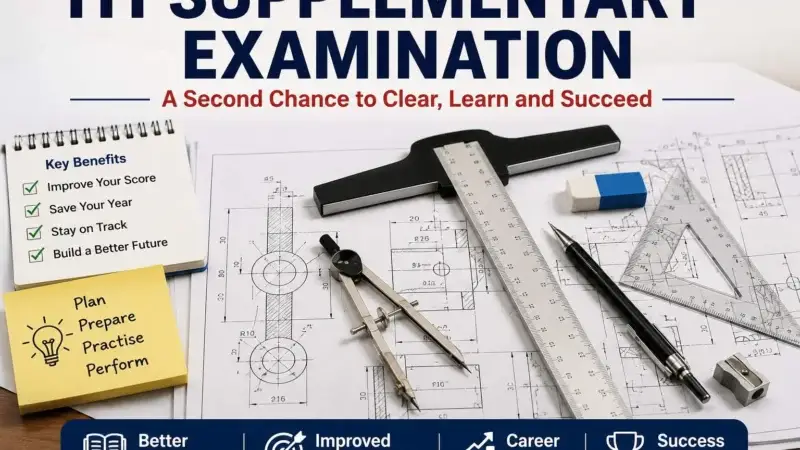
ITI Examination Statistics: The Need for ITI Supplementary Examination
According to data from the DGT and publicly available reports on data.gov.in, the ITI examination landscape is vast. While exact yearly failure rates vary by trade and region, a significant number of candidates rely on the supplementary chance.
| Examination Component | Total Students Appeared (2022-23 Est.) | Typical Pass Rate (%) | Students Requiring Supplementary (Est.) |
| Trade Practical | 10,00,000+ | 85-90% | 1,00,000 – 1,50,000 |
| Trade Theory | 10,00,000+ | 75-80% | 2,00,000 – 2,50,000 |
| Engineering Drawing | 5,00,000+ | 70-75% | 1,25,000 – 1,50,000 |
| Employability Skills | 5,00,000+ | 80-85% | 75,000 – 1,00,000 |
| Total Candidates (Approximation) | Over 1 Million Annually | N/A | Hundreds of Thousands |
Source: DGT Annual Reports, MSDE Public Data (Approximate figures based on available data up to 2023).
The data above highlights that hundreds of thousands of students are given a second shot annually through the ITI Supplementary Examination. For a country relying on a skilled workforce, ensuring these students complete their certification is an economic imperative, not just a personal one.
⚙️ The Step-by-Step Process for the ITI Supplementary Examination
My experience with the supplementary exam taught me that the process is rigid and requires careful attention to detail. Amit and I had to be meticulous about every step.
1. Notification and Registration
- Official Announcement: The DGT/NCVT releases a notification regarding the supplementary examination schedule, usually on the official NCVT MIS portal.
- Institute Role: Your specific ITI institute is the primary point of contact. They receive the official circular and are responsible for informing eligible students.
- Fees Payment: A crucial step. Candidates must pay the prescribed examination and registration fees to the institute. This fee is non-refundable and varies, but is generally a modest amount set by the DGT. Always ask for an official receipt.
2. Form Submission and Data Verification
- Application Form: Fill out the supplementary examination application form provided by the ITI.
- Data Upload: The institute uploads the list of fee-paid candidates to the NCVT MIS Portal. This is the digital confirmation that you are registered. Verify your details!
- Admit Card Generation: Once successfully registered on the portal, your ITI Supplementary Examination Admit Card (Hall Ticket) will be generated. The institute will download and distribute this.
3. The Examination
- Format: Supplementary exams follow the same pattern as the main exams (CBT for theoretical papers and physical/traditional for practicals and drawing).
- Timing: They are conducted as per the published schedule, simultaneously across the region.
4. Result and Certification
- Result Declaration: Results are declared on the NCVT MIS portal.
- NTC Issuance: Once you successfully clear the ITI Supplementary Examination, your final passing marks are updated, and the NCVT issues the National Trade Certificate (NTC), certifying you as a skilled professional.
Crucial Tip: Check the NCVT MIS Portal regularly. Do not rely solely on messages or word-of-mouth. The official website is your single source of truth for the ITI Supplementary Examination schedule and results.
The Secret Strategy: Acing the ITI Supplementary Examination
The mistake I made in Engineering Drawing was simple: overconfidence and neglecting practice. Amit’s error in Trade Theory was memorization without true conceptual understanding.
The strategy for the ITI Supplementary Examination is different from the main exam; it is targeted, focused, and efficient.
🎯 Targeted Preparation for Specific Subjects
A. Clearing Trade Theory & Employability Skills (CBT)
- Focus on ‘Why’: Don’t just memorize questions. Understand the underlying mechanical, electrical, or technological principles.
- Previous Year Papers: This is the gold standard. The question bank for supplementary exams often heavily draws from previous years. Practice at least 10 sets of previous year question papers.
- Model Tests: Utilize online mock tests, especially the ones offered by state ITI boards or reputable coaching institutes.
B. Mastering Engineering Drawing
- Practice with Tools: My failure in ED taught me that neatness and precision are key. Practice orthographic projections, isometric views, and basic drafting symbols daily.
- Time Management: ED papers require time. Do full-length practice sessions to learn to complete the required drawings within the exam duration.
C. Dominating the Trade Practical
- Simulate the Lab: Ask your institute if you can get extra lab time. Practice the specific job/exercise you failed. If you failed a fitting practical, practice fitting.
- Procedure is King: In the practical exam, half the marks are often for the correct sequential procedure. Write down the steps: Marking, Sawing, Filing, Finishing, Measurement.
ITI Supplementary Examination Mindset: The Emotional Comeback
- Relieve the Pressure: Remind yourself you only have one or two subjects to focus on, not all five! This is a massive advantage.
- Seek Mentorship: My Principal, Mr. Verma, connected Amit and me with a retired ITI instructor. Having a dedicated mentor to clear doubts in specific areas was transformative.
- Don’t Isolate: Talk to other students who are also preparing for the supplementary exam. Share notes, test each other, and create a positive study group.
🚀 Conclusion: From Failure to a Brighter Future
Amit cleared his Trade Theory paper with flying colors, scoring 85%. I managed to scrape through Engineering Drawing, learning that a methodical approach trumps last-minute cramming.
The ITI Supplementary Examination is a test of resilience, not just knowledge. It’s DGT’s way of saying: “We know you have the skill; prove you have the dedication.” The stakes are high: clearing your supplementary exam is the difference between an uncertified stint as a daily wage worker and a recognized NTC holder eligible for government jobs, apprenticeships at major corporations (like Indian Railways or SAIL), and the ability to start your own successful business.
Our experience in Rampur taught us that preparation, attention to the rigid DGT timelines, and a focused study plan are the keys to turning a failure mark into a career certificate. Don’t let a small slip-up define your future. Embrace this second chance, prepare smartly, and secure the skilled career you worked so hard for.
Final Actionable Advice: Immediately check with your ITI Principal or Examination Coordinator about the current registration window for the ITI Supplementary Examination. Do not delay. The window closes fast!
❓ Frequently Asked Questions (FAQ) about the ITI Supplementary Examination
Q1: What is the last date to apply for the ITI Supplementary Examination?
The application dates vary depending on the examination cycle announced by the DGT. Generally, the registration window opens shortly after the main exam results are declared and remains open for about 3 to 4 weeks. Always check the NCVT MIS portal for the official notification.
Q2: Can I get my answer sheet re-evaluated after the supplementary exam?
Yes, the process for re-evaluation (re-checking of marks) or re-totaling (re-counting of marks) is generally available even after the supplementary examination results. You must apply for this through your ITI institute and pay a prescribed fee within the specified time window.
Q3: What happens if I fail the ITI Supplementary Examination again?
DGT typically allows multiple attempts to clear the backlog papers within a stipulated time frame (often three to five years from the admission date). You will have to register and pay the fees again for the next scheduled supplementary examination.
Q4: Is the syllabus for the supplementary exam different from the main exam?
No, the syllabus for the ITI Supplementary Examination is the same as the main examination for that specific subject and trade. The difficulty level is also maintained to ensure the quality standard of the National Trade Certificate (NTC).
Q5: Are the examination fees for the supplementary papers refundable?
No, the examination fees for the ITI Supplementary Examination are generally non-refundable, regardless of whether you appear for the exam or not. The fee covers the administrative costs of registration and conducting the paper.
Q6: How long does it take to receive the NTC after clearing the supplementary paper?
Once the supplementary results are officially declared and updated on the NCVT MIS portal, the process of issuing the final National Trade Certificate (NTC) usually takes a few weeks to a couple of months. The digital certificate is often available first on the portal, followed by the physical copy distributed by the ITI.
Q7: Where can I find reliable study material for the ITI Supplementary Examination?
Reliable study material includes official DGT textbooks, previous year question papers available on various state ITI websites, and the mock tests provided on the NCVT MIS learning portal. Always prioritize material directly recommended by your institute’s faculty.
Rakesh Kumar
Thank you for reaching out, Rakesh! We appreciate your support. Stay tuned to Info ITI for more helpful guides and technical career updates. Wishing you all the best!